Supplements That Help Reduce Blood Pressure

Having – or getting – healthy blood pressure is all about making sure your body has what it needs to keep itself in balance. It’s a bit like conducting an orchestra – many elements are needed!

Making sure you’re getting the large-scale nutrients like fibre, protein and fat is one thing, but it’s quite difficult to discern whether you’re getting enough vitamins and minerals. Although you need much smaller amounts of these, they are no less important – and for healthy blood pressure they are vital.

supplements that help reduce blood pressure - nor not?Potassium, calcium and magnesium are the minerals best known for helping to reduce or prevent high blood pressure, interacting to keep your blood vessels relaxed and dilated.

Of the vitamins, the antioxidant properties of vitamins C and E are known to protect the lining of your arteries, while the B vitamins and vitamin D work with other substances in the body to regulate blood pressure.


To supplement or not to supplement?

There’s two approaches to supplementing. One is to take supplements to ensure you’re getting enough of the essential elements, and the other is to take supplements of ‘extra’ nutrients that are good for you which you wouldn’t normally get in your daily diet.

Making sure to get enough of the essential vitamins and minerals

Is it necessary to take supplements though, or can we get enough of the essential elements we need to stay healthy from what we eat and drink?

That is the big health question. The debate has been going on for a while and shows no sign of stopping.

Supplements are necessary to ensure you’re getting enough nutrients…

Some argue that it’s impossible to get enough of the important vitamins and minerals from food, and that it’s necessary to supplement this by taking vitamin and mineral pills.

One of the reasons you may not be getting enough essential nutrients needed is that you’re not eating a varied and balanced enough diet – not eating many vegetables, for example. However, even if you are eating very well, the effects of decades of large-scale intensive farming is that in many places soils are depleted of nutrients (and that’s not counting the negative effects of pesticides and herbicides). Which means the foods grown in such soils are less nutritious than in previous years. (Depending on your age, you might have noticed that many fruits and vegetables have less flavour than they used to. Certainly, my mum says she remembers when carrots and peas and grapes had more intense flavours than they do today.) In this case, supplements may be useful to supply the missing nutrients. (Of course, eating organic food, if you can get it and if you can afford it, will also help.)

Or supplements aren’t effective and are a waste of money… ?

Others argue that the body can’t extract the right substances in the right form from supplements as well as it can from natural food, and so taking supplements is ineffective, and a waste of money.

For example, one Harvard nutrition scientist once famously said that vitamin supplements are “expensive urine” (Victor Herbert, quoted in Time magazine). Indeed, even those in favour of taking supplements admit this may be true in many cases. This is because poorly made supplements contain isolated nutrients in synthetic forms which the body doesn’t recognise as food and can’t absorb. The chemicals are then passed out in your urine.

Obviously, how well you can actually absorb and benefit from a supplement depends to a large extent on the quality of the supplement. As supplements become more popular, there seems to be an increase both in mass suppliers knocking out cheap synthetic supplements and companies carefully creating supplements from high quality botanical ingredients. (The ‘bioavailability’ of the ingredients of the supplement can also be affected by what you take it with – more on this below.)

As for the general question of supplementing or not, it doesn’t seem to be unequivocally answered by research yet. There’s some evidence for both points of view.


Taking ‘super’ supplements

Even if you’re confident you’re getting everything you need from either your diet alone, or your diet plus basic supplements, you might want to take additional supplements too. These would be of substances which have additional health benefits but which you’re almost certainly not getting in what you regularly eat and drink.

For example, turmeric has had a lot of press in recent years because the exceptional properties of a substance it contains called curcumin. (You can read more about this in our article here: Turmeric for lower blood pressure). Curcumin is a powerful anti-inflammatory and, as such, is helpful in treating multiple health conditions, including high blood pressure.

One thing’s for sure: you need to eat well

What is agreed, however, is that there is NO substitute for a healthy well-rounded diet, with a healthy adequately active lifestyle. With your health and food, everything is connected. Vitamins and minerals and other food substances interact with each other, and this affects how well they are absorbed and stored by the body, and how they work once in the body. So even taking one super-supplement in isolation won’t help much if you’re not getting enough of other substances that it works in concert with.

So the best approach is to build yourself a balanced varied diet – of real food, organic if you can. If you put some effort and attention into eating enough healthy foods each day, there should be no problem with getting the nutrients and elements you need – in most cases. We know the body can effectively absorb nutrients from food – or relatively unprocessed foods anyway – and you’ll also save money on supplements.

(For more information on healthy diets as they pertain to healthy blood pressure, you can browse the many articles on this website, or start with our overview here: High blood pressure diets)

Having said that, there are some things that it may be difficult to get enough of, or are just so important that you don’t want to take any chances – so for those, it’s beneficial to take supplements.

Also, if you’re travelling, or in some other situation where it might be difficult for you to maintain your ideal food schedule, then supplements can be a good temporary back-up.


Supplements that help reduce blood pressure

How much of each vitamin/mineral?

National health authorities usually give RDAs – recommended daily allowances – for each vitamin and mineral. So you want to at least be getting that much. These are based on just keeping most people in basic health though, i.e., preventing deficiencies, and don’t take account of specific health conditions, like high blood pressure. For optimal health – and to improve your blood pressure levels – you’re often best to take more than the RDA.

For example, the DASH diet (Dietary Approaches to Stop Hypertension) outlined by US health authorities, recommends that you get 500mg of magnesium daily (100mg more than the RDA), and of 1250mg a day of calcium (250mg more than the RDA).

Balancing supplements and diet

So consider the amount of something that you want to take. Some things are difficult to get enough of just from natural sources – vitamin D, for example – so it’s advisable to take a regular supplement that gives you at least your full RDA.

Some things you may just want to take a supplement as an extra – to supplement what you’re already getting from your diet. In that case, allow for that when figuring out how strong a supplement you want to take. If you’re eating a citrus fruit every day for example, you can take less vitamin C as a supplement.

Diet is also important as it affects how well a certain supplement can be absorbed and used by your body. Some vitamins and minerals need other substances present for them to be effectively absorbed. For example, taking an iron supplement with food or drink containing vitamin C will help it to be absorbed and used. And fat-soluble vitamins need some fat present in order to be absorbed – more below.

Water-soluble and fat-soluble vitamins

You also have to take account of what kind of vitamin it is. Vitamin C and the B vitamins (including folic acid) are water-soluble, so can’t be stored by your body. This means you have to get these every day. They are also more easily flushed out from food, depending on how they’re stored and cooked (more below), so you do need to take more care to get enough of these vitamins.

However, if you’re taking supplements of vitamin C or B vitamins, there’s less risk of overdosing on them, because whatever the body doesn’t absorb it just passes out in your urine.

Other vitamins  – A, D, E, K – are fat-soluble so can be stored in your body’s fatty tissues and liver. This means they can build up in your body over time, and aren’t as easily lost from food, so it’s generally easier to get enough of these vitamins from your food. There’s also more danger of building up toxic levels of them if you take supplements in doses that are too high. In general, you don’t need supplements of these vitamins – except for vitamin D, which we almost always need more of!

If you are taking a fat-soluble vitamin supplement, make sure to take it with some food which contains fat – some fat needs to be present in order for the body to be able to absorb it. Certainly, don’t take it on an empty stomach as then you will just be making “expensive urine”.

Everything in moderation…

Vitamins and minerals interact with each other in various ways. Some affect how well others can be used and absorbed by the body and/or how well they work in the body. Some work interdependently. The levels of some affect the levels of others.

Overall, your health depends on vitamins and minerals working in balance with each other. So be careful of suddenly taking very high doses of one thing as it can upset that balance, and can cause you to be depleted of other vitamins and minerals, or reduce their efficacy.

As with many foods and drinks, moderation is key….

PLEASE NOTE: Many of these vitamins and minerals can also interact with other medications. In general, if you are getting them from your diet, there are unlikely to be problems. However, if you’re on any medication or have specific health conditions, best to talk to your doctor/a healthcare professional before starting supplements, to make sure there won’t be any unwanted interactions or effects.
best herbal remedy for high blood pressure

Which are the best supplements to buy?

Not all supplements were created equal so it’s important to buy a high quality supplement. If you’re going to spend the money to get a supplement, then don’t waste it on a poor quality one that won’t actually help you.

This is a bit easier said than done sometimes though! Even supplements of the same basic ingredient come in different forms. The supplements can contain different amounts of the main ingredient, contain the main ingredient in different chemical forms, and also have different other ingredients. All of these affect how well the ingredient can be absorbed and used by your body.

Which form is best is specific to each kind of supplement, and often there is some disagreement over this. The best thing is to decide which supplements you want to take – narrow it down to the most important – and then do a bit of research: sometimes the staff of the health food or supplement store are a good source of knowledge, or ask a health professional – your doctor, or a nutritionist or suchlike.

Aim to find which are the best brands – those which are known for making good quality supplements. Price isn’t always an accurate guideline, but the super-cheap supplements may not be as effective. If you’re going to take it, make it count.

NOTE: The supplements we’ve linked to on this page are good quality products made by companies which get good reviews and have good reputations. We do receive a small commission if you buy these products (by clicking on the images and links we provide), so we made sure to find good quality products to show you.


Everything you need to know about the supplements which reduce blood pressure

To be sure you’re taking the best supplements for your needs, why not consult our new book:

Lower Your Blood Pressure Naturally – The Complete 9 Step Guide

As well as guidance on the key supplements to take for lower blood pressure, there is a detailed list of all the main supplements that help reduce blood pressure, with information on why they help lower blood pressure, how much to take, and the best form to take them in, and more. Everything you need to know!
lower your bp naturally
Lowering your blood pressure naturally is not just about taking supplements though, of course.

What you eat and drink, how fit and active you are, and how stressed you are all crucially affect your blood pressure.

Lower Your Blood Pressure Naturally looks at all these factors and shows you how to make easy, effective and enjoyable changes in your lifestyle which will lower your blood pressure – and keep it low.

These changes are laid out in nine easy-to-follow steps. These progressive steps are based on the principle that positive incremental change is always best in health matters.

Each chapter will take you further along the road of greater vigour and peace of mind (and a healthy blood pressure).


Hawthorn for lowering blood pressure

Hawthorn for high blood pressure

Hawthorn for lowering blood pressure has become increasingly popular lately and for good reason – it works. But using Hawthorn for high blood pressure is no fad. It’s been a well-trusted cure for hundreds of years.

Hawthorn trees and Hawthorn tincture

Hawthorn for lowering blood pressure

Welsh Mountain Hawthorn

Hawthorn is one of the three sacred trees of the Irish and has always played a big role in Celtic folklore. As a symbol of protection a cutting was placed on doorways to ward off evil. Ribbons were also placed on the tree as decorations on May Day.

Although Hawthorn don’t grow very large they are tough and can live for up to 400 years. Today the Hawthorn is found clinging onto the mountainsides here in Wales and is often used as a hedgerow shrub.


Hawthorn for lowering blood pressure

hawthorn-for-lower-blood-pressure-diyThe hawthorn berry has long been regarded as a ‘heart herb’. Tinctures and teas made from it has been used to relieve stress and strengthen the heart by the Druids.

Modern science backs these beliefs. Hawthorn has a mixture of phenols that strengthen the heart, lower cholesterol, reduce resistance in arteries, and lower blood pressure. It acts as a vasodilator – helping the arteries to relax and widen and let the blood flow more smoothly with less pressure.

One Iranian study showed a significant decrease in blood pressure over a three month period of using Hawthorn. The effects of Hawthorn build up over time if taken regularly. Hawthorn’s cardio-protective effect actually gets stronger over time.


Supplements containing hawthorn

If you want to use hawthorn for lowering blood pressure but don’t have access to hawthorn trees, or just prefer to take hawthorn in a pre-made preparation, you can buy supplements containing hawthorn.

You can get supplements containing only hawthorn extract, or you can get supplements with other blood pressure-lowering ingredients too, such as Alistrol. More details:

Hawthorn tablets:

Some natural health practitioners recommend  hawthorn supplements of 100-250mg, taken three times a day. Some also recommend that hawthorn supplements contain at least 10% procyanidins (a key group of antioxidants).


Do-it-yourself hawthorn for lower blood pressure

Hawthorn (using the berries and flowers) can be taken as a tea or a tincture. I take it every morning – 25 to 30 drops of tincture in a glass of water. You can buy Hawthorn tincture at most good health food shops. Or you can make your own:

To make Hawthorn tincture pick the flowers in the May/early June and/or the berries in late September/October. Place the berries and/or flowers in a jar and fill the jar with a spirit of 50% to 60% volume alcohol.

Strong vodka is usually recommended but I have used moonshine with good results. Leave the mixture for 2 – 4 weeks out of direct sunlight. Then strain it and dispose of the solid stuff. Store the tincture in small dark bottles with a dropper for easy access and use.

Take 25 – 30 drops of Hawthorn tincture up to three times daily for cumulative and beneficial results and lower blood pressure.

If you have enough tincture left over from the year before, you can use it to extract the goodness from another picking of Hawtorn flowers and/or berries.

Consider Hawthorn a powerful ally in your quest for lowering blood pressure and restoring good health. Taken with a health diet and ample exercise and you should see your blood pressure come start to come down in no time at all.

Personally I prefer using just the Hawthorn berries to make the tincture as they are simpler to pick and use. It’s also easy to see when the mixture is ready to be strained. When the dark red berries have turned white, the heart tonic phenols are in the liquid, not the berry and it’s time to separate the two into tincture and compost.

Avoid leaving the berries too long in the alcohol. If you leave it too long (over 3 or 4 months) it will just turn into a mushy jelly unsuitable for use.

P.S. If you do make your own hawthorn tincture, don’t eat the berries while you’re picking as their seeds contain a substance which is turned into cyanide in the stomach….! If you really want to try the berries, make sure to spit out the seeds.


NOTE: Hawthorn can interact with some medications

Hawthorn is known to interact with some blood pressure and heart medications (including beta-blockers, calcium channel-blockers and digoxin). So talk to your doctor before starting to take hawthorn if you’re on prescription medications.


More herbs, foods, drinks, exercises, tips for lowering blood pressure

By the way, if you need to lower your blood pressure starting today, and want to accomplish it without taking medications it’s not as hard as you may think.

lower your blood pressure naturally with diet, exercise and relaxation - and garlicYou can just follow the 9 steps in our new guide to get back to healthy blood pressure the way nature intended it.

Lower Your Blood Pressure Naturally is a comprehensive guide to the many things you can do to lower your blood pressure, such as changing some of what you eat and drink, being more active, and learning to relax more deeply and deal with stress better.

The guide is laid out in a step-by-step format which you can take at your own pace, so that it’s easy to follow, fun to read – and it works.


Handgrip Exercises for Lower Blood Pressure

handgrip exercises for lower blood pressureYou probably know that regular aerobic/cardio exercise is important for reducing high blood pressure.

Aerobic exercise is activity that gets your heart and lungs working harder, and it can be anything from walking to swimming, to raking up leaves or cleaning the floor.

But did you know you can also lower your blood pressure by just sitting around squeezing something for quarter of an hour a day?

Doing hand-grip exercises for lower blood pressure could be the easiest way to lower your blood pressure that’s been discovered….

Isometric hand-grip exercise

Isometric exercise involves using muscular force, but without movement, and some forms of isometric exercise have been found to have surprising benefits for blood pressure.

The main type studied is isometric hand-grip exercise which basically involves gripping something with your hand, to contract the muscles in your arm, but without moving your arm itself.

This might not sound like much but it turns out that doing it regularly can lower your blood pressure over time.

This was discovered by accident in the 1970s, by a scientist working with US fighter pilots to help them deal with high G-forces when flying. He developed a device that they could squeeze with their hands, to temporarily raise their blood pressure just enough to stop them blacking out.

It worked, but then they found it had a great side-effect – it had lowered the blood pressure of those pilots who’d had high blood pressure (and who were doing this hand-squeezing exercise regularly).

*a range of devices for doing hand-grip exercises for lower blood pressure are outlined below*


Benefits of hand-grip exercises for lower blood pressure

Many studies have been done since then on the effects of doing isometric handgrip exercises for lower blood pressure, and a report published by the American Heart Association in April 2013 concluded that such handgrip exercises produce “significant reductions” in blood pressure.

In fact, recent reviews of isometric hand-grip exercise studies show drops in blood pressure of 10%. It’s not completely clear to medical researchers how hand-grip exercises lower blood pressure, but research suggests it works in at least three ways:

  • it balances your autonomic nervous system – which regulates all the things you don’t have to think about, including blood pressure
  • it improves the condition of your blood vessels, repairing any damage
  • it encourages your blood vessels to dilate, allowing freer blood flow

Isometric hand-grip exercise affects blood pressure in a different way to aerobic exercise so it’s worth doing, even if you’re getting plenty aerobic exercise. Also, this hand-grip exercise on its own has been shown to be effective at lowering blood pressure, so if you’re not able to be more active, it’s a great way to improve your blood pressure.

A big advantage of doing hand-grip exercises for lower blood pressure is that it doesn’t take a lot of time. You only need to do it for about 12 minutes a day, several times a week, and you can do it pretty much anywhere – standing up, sitting down, watching TV….so it’s a small commitment for potentially impressive results.

Mind you, the effects take some time to manifest – it may take a month or two. So you need to keep doing it – you’ll continue to feel the benefits as long as you continue to do the exercises.


How to do hand-grip exercises for lower blood pressure

Isometric hand-grip exercises for lower blood pressure are pretty straightforward. They basically consist of squeezing or gripping something for 2 minutes at a time, at about a third of your full grip-strength, and doing this several times.

Click here for detailed instructions on how to do hand grip exercises to lower blood pressure

You need something to squeeze though, and there are a range of different devices that you can use for doing handgrip exercises, ranging from the very cheap to the very expensive.


Hand-grip devices for lowering blood pressure

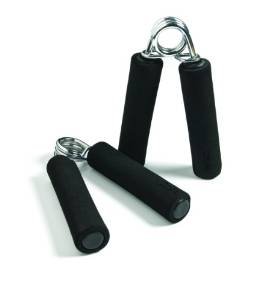
handgrippersYou can do hand-grip exercises using ordinary hand-grip strengtheners. These are usually in the form of spring-loaded handles which you have to squeeze together. You can also use a squeezy de-stress-ball, or any rubber ball really.

There are now also devices which show your grip strength as you’re gripping so, as long as you keep an eye on it, you can make sure to grip the right amount. (Just grip with your full strength first and record the figure show, divide this amount by three, then when gripping, aim to be gripping that amount.)

Here’s a sample of devices you can buy online which you can use to do IHG exercises.

Easy handgrippers – reviews say they ones are quite easy to squeeze so these could be good to start with or if you don’t have particularly strong hands. Remember, you only need to be gripping something at a third of your full strength so you don’t want a device that’s too difficult for you to squeeze.


Safety of hand-grip exercises

Hand-grip exercises are safe to do for pretty much everyone. The main exceptions are if you have problems with your hands, like arthritis, or carpal tunnel syndrome, in which case you might find it too difficult to squeeze effectively.

The other exception may be if you have very high blood pressure. This is because hand-grip exercise works to reduce your resting blood pressure – i.e., your blood pressure when you’re not exercising. However, you often get a temporary spike in blood pressure whilst doing the exercises. This usually resolves itself within a few minutes, but if your blood pressure is very high, this may be a little risky.

The American Heart Association recommends that “isometric exercise should be avoided among individuals with BP levels >180/110 mm Hg until their hypertension is better controlled.” (Hypertension journal, April 2013) If you have any concerns regarding the suitability of hand-grip exercises for yourself, speak to your doctor before starting.


Will doing hand-grip exercises be enough to lower my blood pressure?

Hand grip exercises don’t seem to work for everyone to lower blood pressure, but research suggests they do work for most. So there’s a good chance that doing hand-grip exercises regularly can make a difference to your blood pressure. However, even so, they may or may not lower it enough. Everyone’s different, so give it a try.

However, if you find you need to get your blood pressure down further, don’t worry – there are a lot of other things you can do, such as eating more or less of certain things, being more active, practising relaxation techniques and getting a handle on any stress.

In fact, for lowering blood pressure naturally, it’s generally most effective to take a broad approach, so that everything works together to contribute to getting your body, and your blood pressure, into a healthier balance.

So where do you start? Well, to make it simple, we’ve put together an easy-to-follow guide:

Lower Your Blood Pressure Naturally – The Complete 9 Step Guide

As the title suggests, the guide is laid out into nine clear steps. Each step deals with different things you can do to lower your blood pressure:

  • the foods and drinks you need to get more of or avoid
  • how you can be more active in your day to day life without having to get into lycra and go to the gym (unless you want to, of course)
  • how to handle your stress levels and enjoy a more relaxing life

lower your blood pressure naturallyEach step sets out straightforward aims and action plans so that you know what to do and how to do it. And you can take each step at whatever pace suits you – making simple changes to your diet and daily routine as you go.

Perhaps most importantly, the guide shows you how to incorporate these changes into your life simply and easily – and enjoyably!

Lowering your blood pressure naturally doesn’t have to be difficult. And it’s difficult not to enjoy feeling healthier and happier and more relaxed!


Does Smoking Cause High Blood Pressure?

Does smoking cause high blood pressure?I don’t think anyone would deny that habitually smoking tobacco helps to raise your blood pressure. There have been many studies done that show how nicotine and other chemicals can cause arteries to constrict. You don’t have to be a brain surgeon to know that constricted arteries means it’s harder for the blood to get through. The heart has to work harder and the blood pressure increases.

Yet how many of us may know people in their seventies and eighties still puffing away as they have for decades. Smoking clearly isn’t an inescapable early death sentence.

But statistically you are far more likely to have chronic high blood pressure and die prematurely of heart disease, or stroke, or cancer, or any number of fatal ailments if you are a smoker than a nonsmoker.

There’s no escaping that fact.


Does smoking cause high blood pressure?

But smoking isn’t the main cause of high blood pressure in the modern world. Stress is. Stress from debts, work, family, relationships … stress from living!

And there are a few things more stressful than being a smoker in the twenty first century! Smokers have become the modern social outcasts – the new lepers. That’s stressful.

Now the sensible advice from the non-smoker is simple “just quit”. But what if you love smoking. What if you need that smoke to relax and de-stress? To a person who as never smoked that probably sounds silly. But I think most smokers can relate.

I know because I smoked for more years than I care to count. And I still struggle with it at times. You never know when a cigarette is going to ambush you when your guard is down and demand to be smoked!

Hence I have put together a little book on smoking –

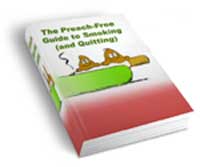
The Preach-Free Guide to Smoking and Quitting

The book serves two purposes:The Preach-Free Guide to Smoking and Quitting

  1. It takes a fun look at the smoking habit and explores the psychology of a smoker  (the first version of this book was writes by a former smoker). And it does it with humor, empathy and cartoons. The book will also help you understand why you smoke. Since smoking is often used as a stress buster, it should help reduce those feelings of shame and guilt we feel for smoking. And it will help reduce your stress related high blood pressure – whether you quit or not.
  2. If you are minded to butt out the cigarettes for the last time, this book will significantly up put the odds in your favor for success. It’s all a psychological battle really, as you’ll discover. You’ll learn how and why quitting smoking is no more difficult than jumping over a big puddle. It’s really that easy when you know how.

If you don’t smoke but know someone who does, it could be one of the best nag-free quit smoking help you could offer.


UPDATE: The Preach-Free Guide to Smoking and Quitting is now available as a free bonus when you buy my book:
Lower Your Blood Pressure Naturally – The Complete 9 Step Guide

lower your blood pressure naturallyAs the name suggests, the guide contains everything you need to know about how to lower your blood pressure and keep it low through easy, effective and enjoyable changes in lifestyle.

To make this simple and straightforward, the guide is laid out in nine easy-to-follow steps. These progressive steps are based on the principle that positive incremental change is always best in health matters.

Each chapter will take you further along the road of greater vigour and peace of mind (and a healthy blood pressure).

Lower Your Blood Pressure Naturally Guide

All the best,

Simon


Lower Your Blood Pressure Naturally: Step 2

Lower Your Blood Pressure Naturally - The Complete 9 Step Guide

This webpage is a companion to Step 2 of our book:
Lower Your Blood Pressure Naturally – The Complete 9 Step Guide

Step 2 discusses how the start your day to ensure the maximum blood pressure benefits, including what to eat and supplements which may be useful. Start the way you mean to go on!
Click here for more information on the book: Lower Your Blood Pressure Naturally


Starting the Day Right: Morning remedies for high blood pressure

Supplements in general

As discussed in the Appendix (pages 10-12), the issue of supplements – whether to take them and how much – can be a tricky one! Here’s some resources which might be useful.

Dr Sarah Brewer – a UK doctor and nutritionist – articles on supplements and healthy eating (a website recommended by one of our readers)

Our post  – Supplements that help reduce high blood pressure (an overview of the issues and general debate)

Hawthorn supplements

Advocates of hawthorn recommend supplements of 100-250mg, taken three times a day. Some also recommend that hawthorn supplements contain at least 10% procyanidins – a key group of antioxidants.

Hawthorn tablets:

Nature’s Way make ‘Heart Care’ tablets with 80mg hawthorn extract from the leaf and flower and lots of procyanidins, so these could be good to start with


Make your own hawthorn tincture:

Watch our video about making your own hawthorn tincture


Buying Supplements

The Appendix for Step 2 gives detailed information for each key nutrient about the best form of this supplement to buy. However, it can still be tricky knowing which brand of supplements to buy as there are now so many out there!

BUYING SUPPLEMENTS IN A STORE OR ONLINE

If you want to buy in person, then the best plan is to go to your local health food shop. The staff there will be able to help and inform you, plus health food shops in general stock better quality supplements than those you can buy in the supermarket or large retail stores.

You can often get good deals buying supplements online, as the companies are selling directly to you, rather than having the overheads of running a store.


morning remedies for high blood pressure - read our guideNOTE: This page is designed to be a companion page to Step 2 of our guide, ‘Lower Your Blood Pressure Naturally’. As such, it only contains supplementary resources rather than being a full discussion of morning remedies for high blood pressure.
For more information on starting your day right, you can further browse this website or, of course, buy the guide..!
Click here for details: Lower Your Blood Pressure Naturally – The Complete 9 Step Guide


How to Do Hand Grip Exercises to Lower Blood Pressure

how to do hand grip exercises to lower blood pressureThere are several studies which now show that doing simple hand grip exercises can lower blood pressure. However, doing any old hand gripping exercises won’t necessarily work. You have to do them in a certain way for them to be effective in lower your blood pressure. So the question is how to do hand grip exercises to lower blood pressure?

Hand grip exercise devices

To do handgrip devices, you’ll need something to grip.

There are various options. Most simply, you can use basic handgripper devices. These devices are designed to be used for building hand grip strength. However, you can use them to do blood pressure-lowering hand grip exercises instead. You can even just use a squeezable ball.

One thing that’s quite crucial about doing handgrip exercises for lowering blood pressure is that you’re gripping the correct amount – one third of your full grip strength. There’s more details on this below. This means that it’s very useful to have a device that shows your grip strength so you can make sure you’re gripping the right amount.

Devices that do this vary dramatically in price. There are simple electronic handgrip devices which measure your grip strength, and there’s one sophisticated model which give you direct guidance on how much and how long to grip (this one costs a lot more!).

I’ve reviewed and compared these different devices in another post. So click here if you want more information and links to order online: handgrip exercises for lower blood pressure (scroll down a bit to see the device reviews)

So find yourself something to grip and then follow the guidelines below to get started.


How to do hand grip exercises to lower blood pressure

1. Establish the correct grip strength

The main thing to keep in mind when doing hand grip exercises to lower blood pressure is that you don’t need to grip at your full strength. In fact gripping something too tightly for too long is just going to raise your blood pressure more.

So make sure whatever device you’re using isn’t too hard for you to squeeze. You don’t want to be forcing yourself into gripping too tightly. If you’re using handgrippers, then go for low- or moderate-resistance models.

You’re aiming to be gripping your device at about 30% of your full strength.

A good way to gauge this is to grip your device as hard as you can briefly, then try gripping it again at about a third of this intensity. This is the trickiest part of doing hand grip exercises to lower blood pressure. For this reason, using a handgripper that shows your grip strength as you’re doing can be very useful.

Check your grip strength each time

You can do this grip check each time you start a set of hand grip exercises. Your grip-strength might vary slightly from day to day, or even through the day, depending on your energy levels or how you’ve been using your hands or various other factors. So establish this 30% grip at the start of each session. Then pay close attention throughout to make sure you’re keeping that level of grip.

If you decide to do the exercises with alternating hands (see below), then you need to gauge the 30% grip strength separately for each hand.


2. Follow the recommended schedule of grip and rest periods

Now you can get on with doing the exercises. The American Heart Association recommend following the protocols of the published studies on handgrip exercises for lower blood pressure.

The format used in most handgrip exercise studies is as follows:

  • squeeze/grip your chosen object for 2 minutes at a time, at about a third of your full strength
  • rest for a few minutes (most studies used 1 or 3 minute rest periods)
  • repeat this cycle 3 more times (for a total of 4 cycles)  – this works out to about 15 minutes for one session
  • do a session like this 3 or 4 days a week.

Some research suggests alternating hands for each cycle is best. This would mean 2 cycles per hand in total. (In other words, grip for 2 minutes with your right hand, rest, grip for 2 minutes with your left hand, rest, repeat).

Remember to maintain a constant grip strength during the squeezing period. It’s easy to start squeezing harder without realizing or for your grip to soften a bit over time, so try to keep an eye on this.

Build up to it gradually if necessary

At first it can be quite hard to maintain a grip for two minutes even at just a third of your full strength. You can work up to it gradually though. For example, start by gripping for periods of, say, 10 seconds at a time and do a session with these short grip periods. Increase the gripping period each day until you can do it for the full two minutes each time.


3. Keep doing them!

You need to do these hand grip exercises regularly to see any blood pressure-lowering effects. Do them at least 3 – 5 times a week.

Even them, it can take a couple of months of regularly doing the hand grip exercises to see a reduction in your blood pressure. And the benefits only continue as long as you are doing the hand grip exercises. So once you’ve started, don’t stop!


Are hand grip exercises safe for me to do?

For most people hand grip exercises are perfectly safe. There are a couple of exceptions though.

Firstly, if you have any trouble using your hands then hand grip exercises might be too difficult for you. For example, if you have arthritis or carpal tunnel syndrome then you might struggle.

Secondly, if your blood pressure is very high then hand grip exercises may not be a good idea. This is because hand grip exercises work to reduce your resting blood pressure – i.e., your blood pressure when you’re not exercising. However, while you are doing hand grip exercises you often get a temporary spike in blood pressure. Once you’re finished the exercises this spike usually disappears within a few minutes. But if your blood pressure is very high this may be a little risky.

The American Heart Association recommends that “isometric exercise should be avoided among individuals with BP levels >180/110 mm Hg until their hypertension is better controlled.” (Hypertension journal, April 2013.) Be sure to speak to your doctor before doing hand grip exercises if you’re not sure if they’re safe for you.

Can hand grip exercises lower my blood pressure enough?

Studies suggest that if you do hand grip exercises accurately, then doing them regularly can make a noticeable difference to your blood pressure. However, they may not lower your blood pressure enough, depending on how your body responds and on how high your blood pressure is in the first place.

Lowering your blood pressure naturally to a significant degree usually depends on taking a broad approach. So, as well as doing hand grip exercises, you can use other methods to reduce your blood pressure. You can adjust some of the things you eat and drink. You can practise techniques to relax more. And you can (literally) take steps to be more active.

You’ll find a thorough overview of all the ways you can lower your blood pressure naturally in our book: Lower Your Blood Pressure Naturally – The Complete 9 Step Guide

lower your blood pressure naturallySince there are so many things you can do to lower your blood pressure naturally, the problem often is knowing where to start.

To keep it simple, our guide outlines the various options in a straightforward way, and walks you through them in an easy-to-follow step-by-step manner.

Each step deals with different things you can do to lower your blood pressure:

  • the foods and drinks to get more of or avoid
  • how you can be more active in your day to day life
  • how to handle your stress levels and enjoy a more relaxing life

The guide also puts a strong emphasis on how to introduce beneficial changes to your life in a way that works for you. Then you can lower your blood pressure naturally and enjoy the process 🙂

How to do hand grip exercises to lower blood pressure: key references:

Beyond Medications and Diet: Alternative Approaches to Lowering Blood Pressure – A Scientific Statement From the American Heart Association, Hypertension, April 2013

https://hyper.ahajournals.org/content/61/6/1360.long